

My rule: decide which version of Italian New York you actually want
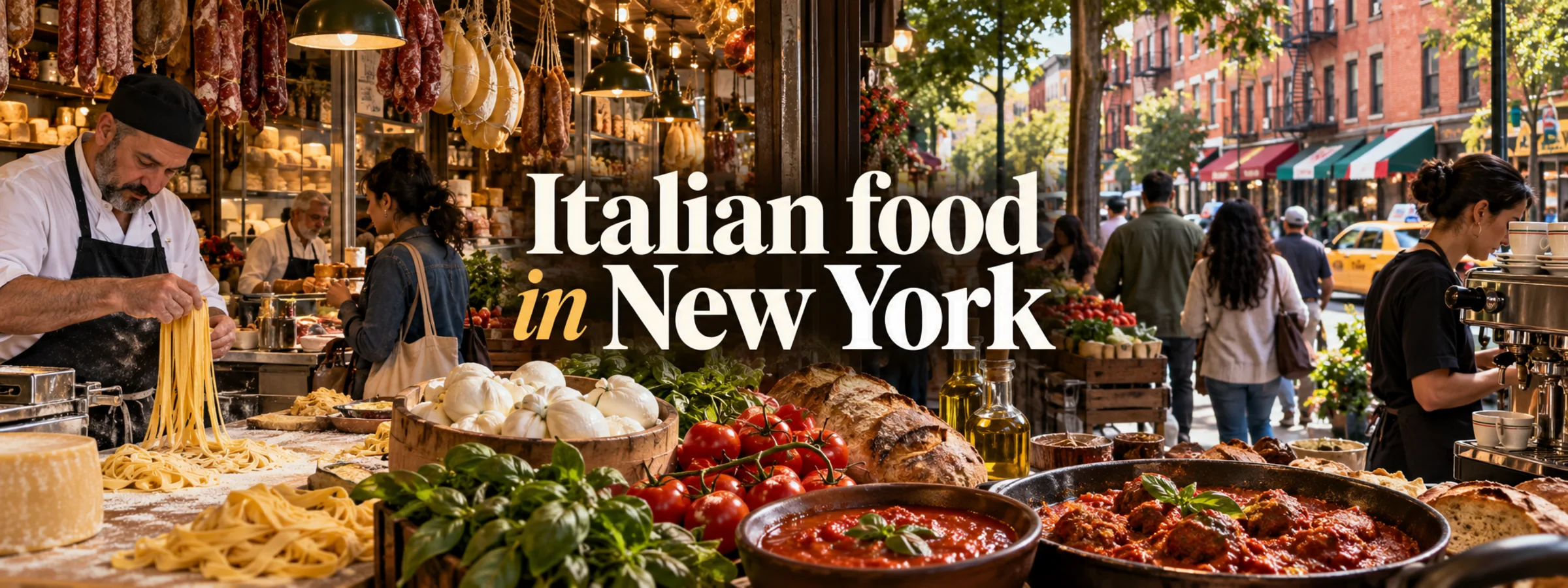
Italian food in New York is not one cuisine and it is definitely not one neighbourhood. A visitor can have a classic Italian-American meal built around red sauce and generous shared plates, shop for bread, cheese, cured meat and pasta in a long-running Bronx food district, or book a modern restaurant cooking a much more regional Italian menu. I would choose the experience first, then the neighbourhood, rather than walking into the first place with a tricolour awning.
Arthur Avenue is the strongest all-round food excursion
For a dedicated Italian-food outing, I would put Belmont and Arthur Avenue in the Bronx ahead of Manhattan's Little Italy. The Belmont Business Improvement District still describes the neighbourhood as a working Italian commercial district with restaurants, bakeries, specialty shops and the Arthur Avenue Retail Market, rather than as a single tourist strip. It also makes sense as a half-day: browse first, eat second, and leave room for something to take away.
Bronx Little Italy — current neighbourhood information
What the Arthur Avenue Retail Market adds
The indoor Arthur Avenue Retail Market has operated since 1940 and gives you a useful concentration of food businesses under one roof. That makes it a good anchor in bad weather and a useful first stop if you are unsure whether you want a sit-down meal, deli-style food or ingredients to take back. Do not treat the market as the whole neighbourhood, though; the surrounding blocks are part of the point.
Arthur Avenue Retail Market — official neighbourhood listing
Italian-American and regional Italian are different choices
Italian-American cooking developed through immigrant communities adapting regional traditions to New York ingredients, economics and tastes. Dishes such as chicken parmigiana, baked ziti and large red-sauce plates belong to that New York story. A contemporary Italian restaurant may instead focus on a specific region, handmade pasta, seafood, vegetables or a more restrained sequence of courses. Neither style is the “real” one; they answer different cravings.
Manhattan's Little Italy: go with the right expectation
Little Italy remains a famous New York place name and can be fun to walk through when you are already exploring Chinatown, Nolita or SoHo. I would not make it the automatic choice for the city's best Italian meal. The historic district has contracted over generations, and the visitor experience is now heavily shaped by tourism. Use it as part of a Lower Manhattan route, then judge each restaurant on its current menu and reputation rather than on the address alone.
Other neighbourhoods can be better for a normal dinner
Carroll Gardens and nearby parts of Brooklyn retain Italian-American food history without requiring a special “Little Italy” visit. The West Village, SoHo and other Manhattan neighbourhoods have strong contemporary Italian options, while excellent Italian restaurants are scattered throughout Brooklyn and Queens. If dinner is one meal inside a busy itinerary, I would choose a good restaurant near the evening's other plans rather than crossing the city just to tick off a neighbourhood name.
How I order when I want to understand the place
- At an old-school Italian-American restaurant: share a starter, choose one red-sauce classic and one house specialty rather than ordering four near-identical pasta dishes.
- At a regional Italian restaurant: read the menu for regional cues and seasonal ingredients instead of expecting every Italian-American standard.
- At a market or deli: ask what is made in-house and what travels well if you are carrying it around all afternoon.
- With a group: check whether dishes are individual or family-style before over-ordering.
Budget for the final bill, not just the menu number
Restaurant food and drink in New York are generally subject to the city's 8.875% sales-tax rate, and table-service gratuity is normally a separate consideration unless the bill already includes a service charge. For the practical money side, use our dining customs and tipping guide before a higher-priced reservation.
Pair the meal with something nearby
Arthur Avenue works well with the Bronx Zoo or New York Botanical Garden when their current opening arrangements fit your day. Manhattan's Little Italy pairs naturally with Chinatown and SoHo. A West Village Italian dinner pairs with a Village walk or nightlife. Planning the surrounding two or three hours is more useful than ranking restaurants citywide.
What I would skip
I would skip any plan built around an ancient “best Italian restaurants” list with no current menu check. Restaurants change chefs, hours, reservation systems and ownership. I would also skip the idea that one famous district represents the whole city's Italian food culture. New York's strength is the contrast between immigrant tradition, neighbourhood institutions and modern regional cooking.
My simple Italian-food plan
- Choose Arthur Avenue for a dedicated food excursion and market browsing.
- Choose Little Italy when it naturally fits a Chinatown/SoHo day.
- Choose a strong neighbourhood restaurant near your evening plans for convenience.
- Check the restaurant's own current menu, opening hours and reservation policy before travelling across town.
Cheers, Carpe Diem & save room for one more course! 🍻⏳🍝
TATS Man
The neighbourhood-first eater